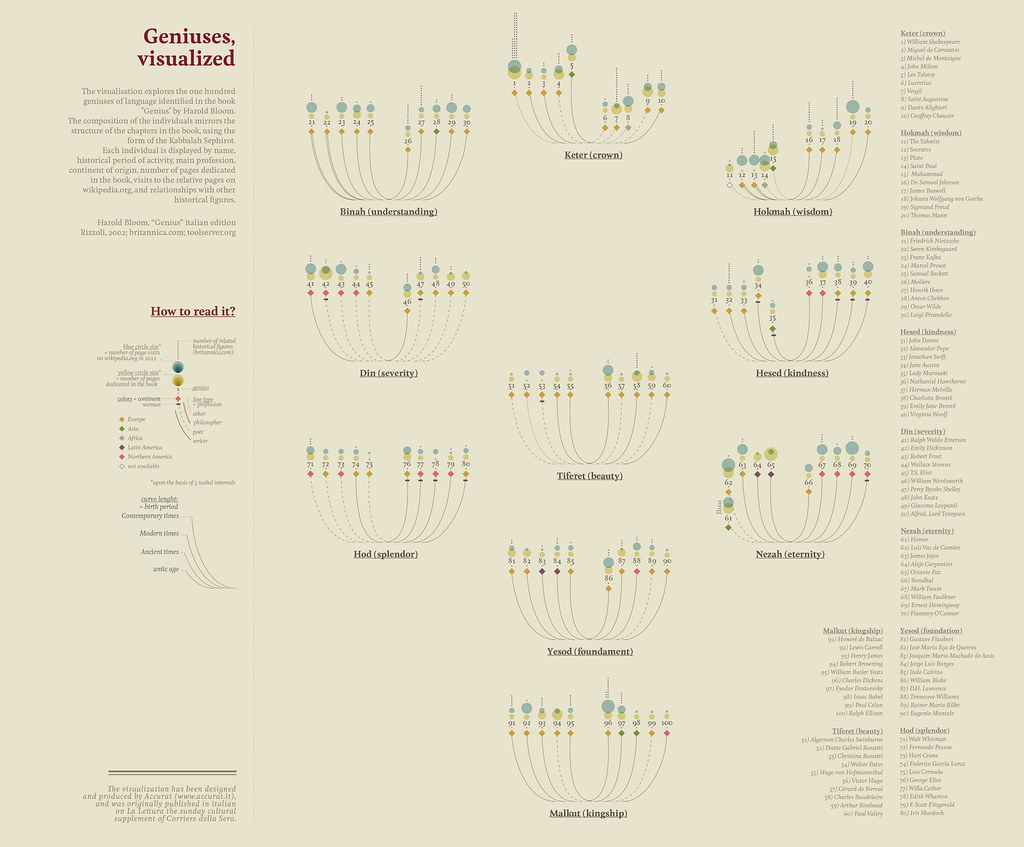
Geniuses, visualized is an infographic based on the 100 “exemplary creative minds” discussed by literary critic Harold Bloom in his book Genius. Published in 2012 in La Lettura, the cultural magazine of Corriere della Sera, it later appeared on Behance.
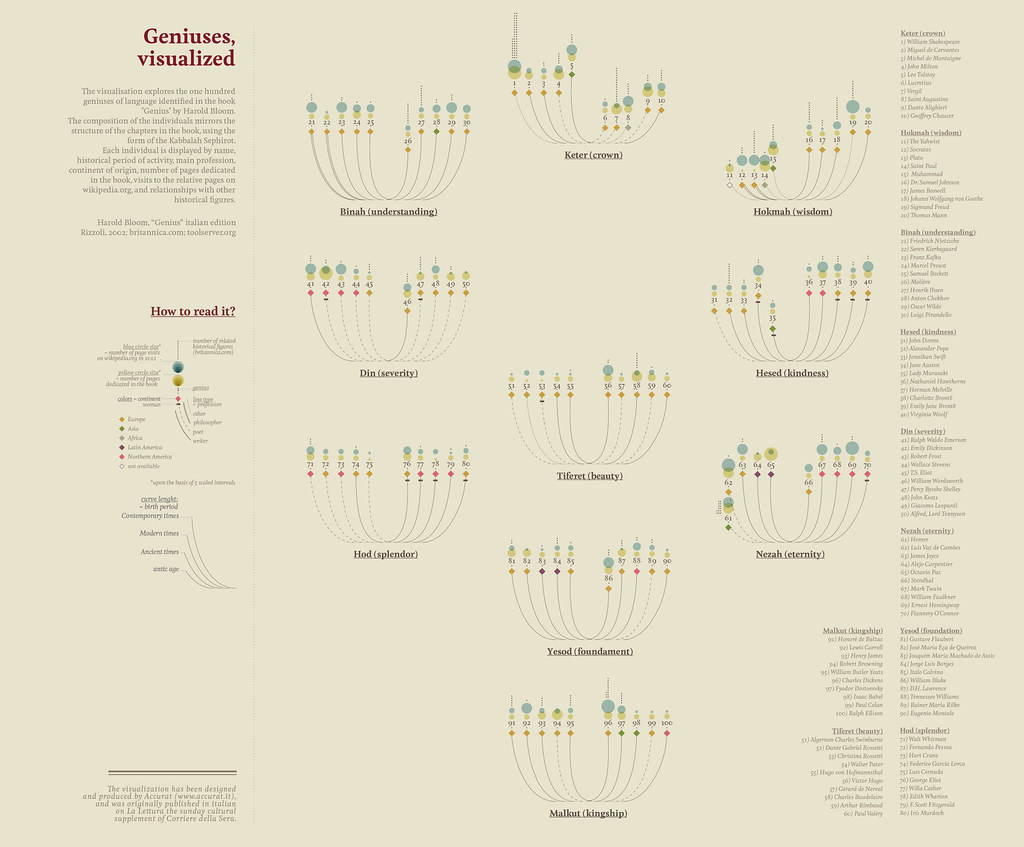
Bloom’s literary figures, from Shakespeare to Lewis Carroll, are arranged through the symbolic structure of the Tree of Sephiroth from Kabbalistic thought. The result is not a list of names, but a map of cultural influence and literary imagination.
How to Read It
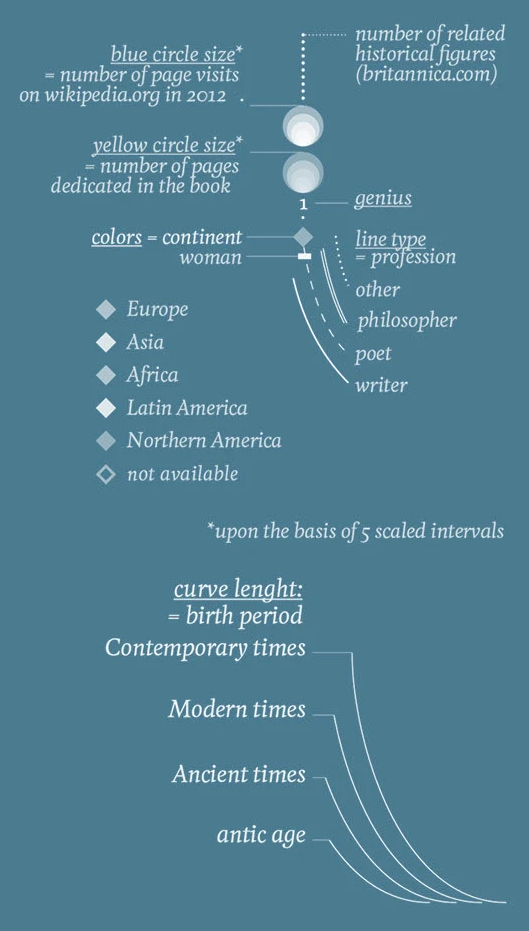
Circle Size
- Blue circle size: Wikipedia page views as of 2012, representing public attention.
- Yellow circle size: number of pages devoted to the figure in Bloom’s Genius.
- Gray dotted number: related historical figures in Encyclopaedia Britannica.
The sizes are normalized into a five-step scale.
Continent
- Green: Europe
- Red: Asia
- Yellow: Africa
- Orange: Latin America
- Blue: North America
- Light gray: unknown
Gender
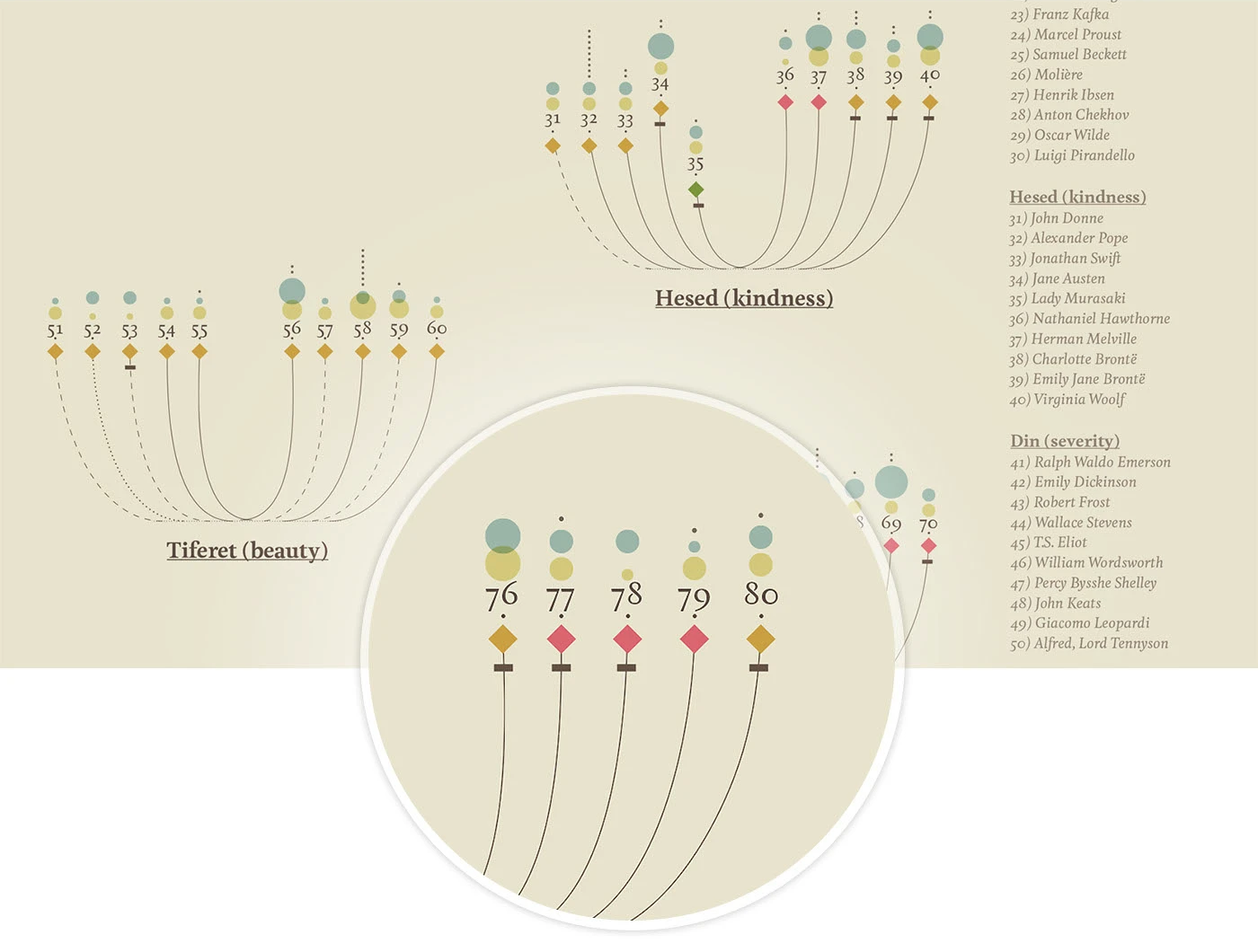
Women are marked with a small diamond beneath the circle. Men are represented by the circle alone.
Profession
- Thick solid line: writer
- Medium solid line: poet
- Thin solid line: philosopher
- Dotted line: other
Period of Birth
Curve length indicates historical period, from contemporary times to ancient or pre-ancient periods.
Context
The Tree of Sephiroth is a diagram from Jewish mysticism that organizes divine attributes into a tree-like structure. This visualization borrows that symbolic system to classify literary genius as if it belonged to a cosmic order of knowledge.
By combining Bloom’s evaluation with Wikipedia and Britannica indicators, the work also contrasts historical prestige with contemporary visibility.
Summary
“Geniuses, visualized” transforms literary criticism into a navigable symbolic map. Color, size, line, and position encode fame, influence, geography, gender, occupation, and historical period, creating a visual universe of literary culture.