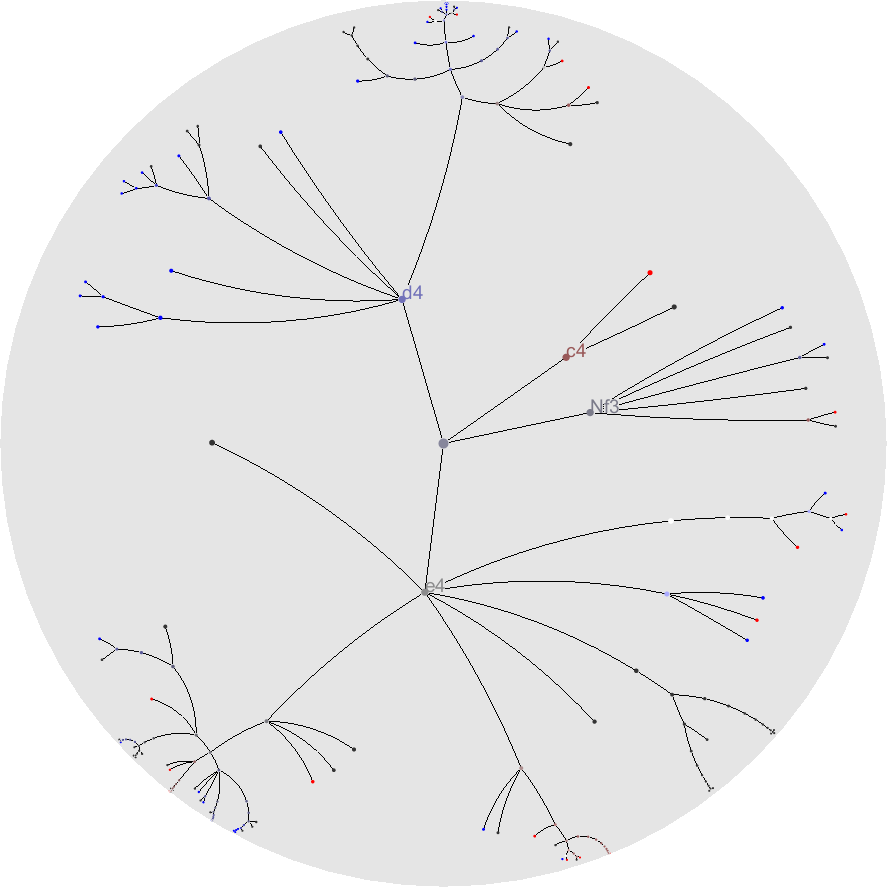
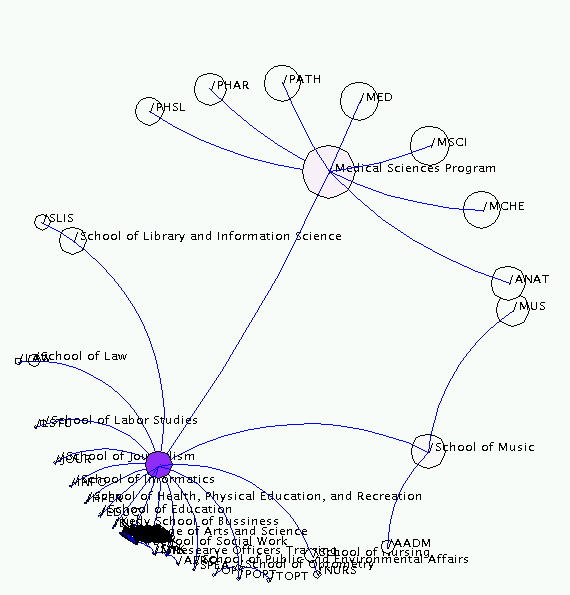
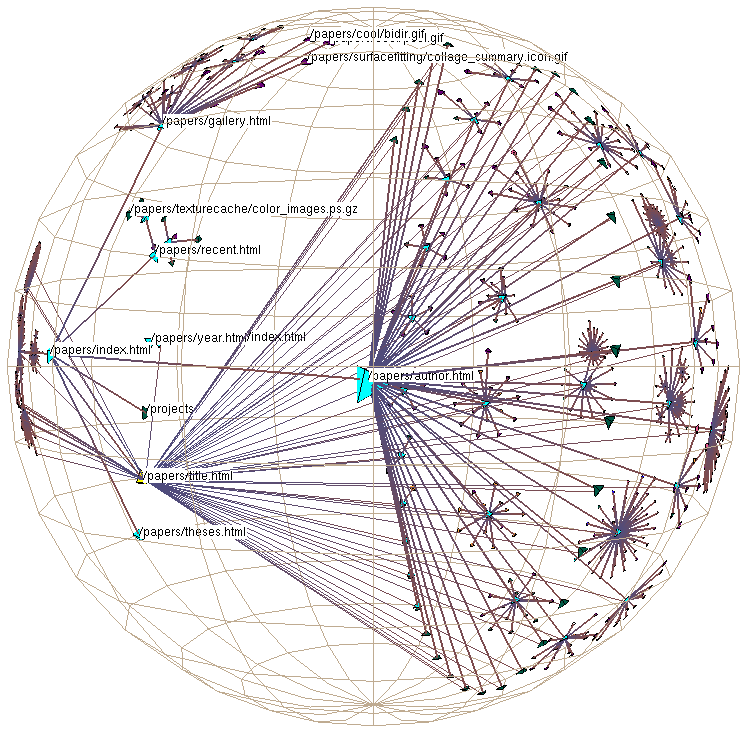
A hyperbolic tree visualizes hierarchical data in a circular hyperbolic space. Elements near the center are enlarged, while elements toward the edge are compressed. This makes it possible to see both a focus area and surrounding context, making it a classic focus-plus-context technique.
Purpose
The purpose is to navigate large hierarchies without losing the broader structure. Users can bring a node into focus while keeping related branches visible around it.
Use Cases
- Large file systems
- Website maps
- Taxonomies
- Knowledge graphs with tree-like structure
Design Notes
- Use interaction; static hyperbolic trees are harder to read.
- Keep labels legible near the focus.
- Provide orientation cues so users do not get lost.
Summary
Hyperbolic trees are powerful for interactive navigation of large hierarchies. Their strength is combining detail and context in one view.