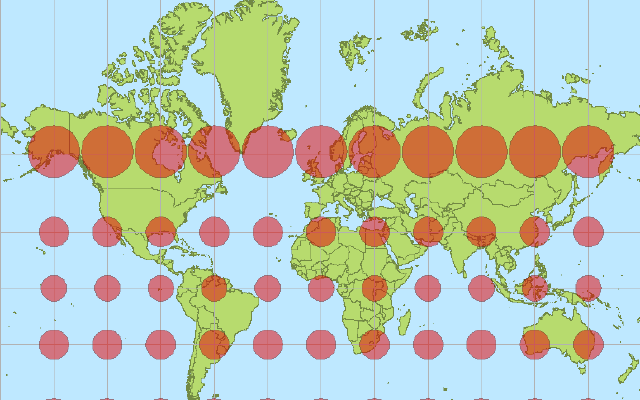
A map projection transforms the three-dimensional Earth into a two-dimensional map. No projection can preserve distance, area, direction, and shape everywhere at once.
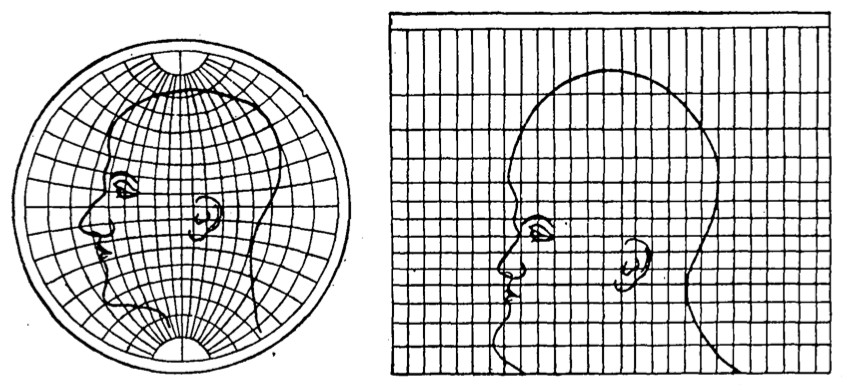
Projection Face helps make this unavoidable distortion intuitive by showing how a familiar face changes under different projections. This article connects a classic 1921 cartography example with the modern interactive work “Projection Face.”
From 3D to 2D
The Earth’s surface is curved. A flat map is therefore always a transformation, not a perfect copy. Some projections preserve area, others preserve local shape, and others preserve distance or direction from certain points.
Why Faces Work
Humans are extremely sensitive to facial distortion. A small change in proportion can feel immediately wrong. By projecting a face instead of only coastlines or graticules, distortion becomes easy to perceive.
Design Lesson
Projection comparison is often taught with graticules, continents, or Tissot’s indicatrix. Faces add another layer: they make distortion emotionally and perceptually obvious.
Summary
Projection Face is effective because it uses a familiar visual object to explain a technical cartographic problem. It makes map distortion easier to understand by turning it into a change in human appearance.